
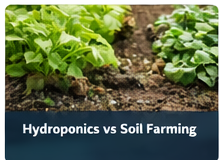
Hydroponics is rapidly becoming a preferred cultivation method for commercial agriculture, especially in controlled-environment systems such as greenhouses and vertical farms. Compared with traditional soil-based farming, hydroponics offers measurable advantages in yield, water efficiency and operational predictability.
Yield comparison
Hydroponic systems allow plants to grow under optimized nutrient and environmental conditions. Typical commercial deployments can deliver 20–40% higher yield per square meter, faster growth cycles and better batch consistency.
Water efficiency
Because hydroponics uses a closed-loop irrigation system, water can be recirculated and controlled more precisely. That can reduce water consumption by up to 90% compared with traditional soil farming.
ROI considerations
Although hydroponics usually requires a higher initial investment, the return is supported by higher yield density, lower water use, reduced fertilizer waste, lower labor intensity and year-round production logic.
For commercial growers and investors, hydroponics is not just an alternative. It is a technology-driven upgrade to agriculture.
Browse Hydroponea products · Explore commercial solutions · Request a proposal
Move from research to project discussion
Use the RFQ flow if you are evaluating a commercial hydroponic system, greenhouse integration or a farm-cell based pilot deployment.